
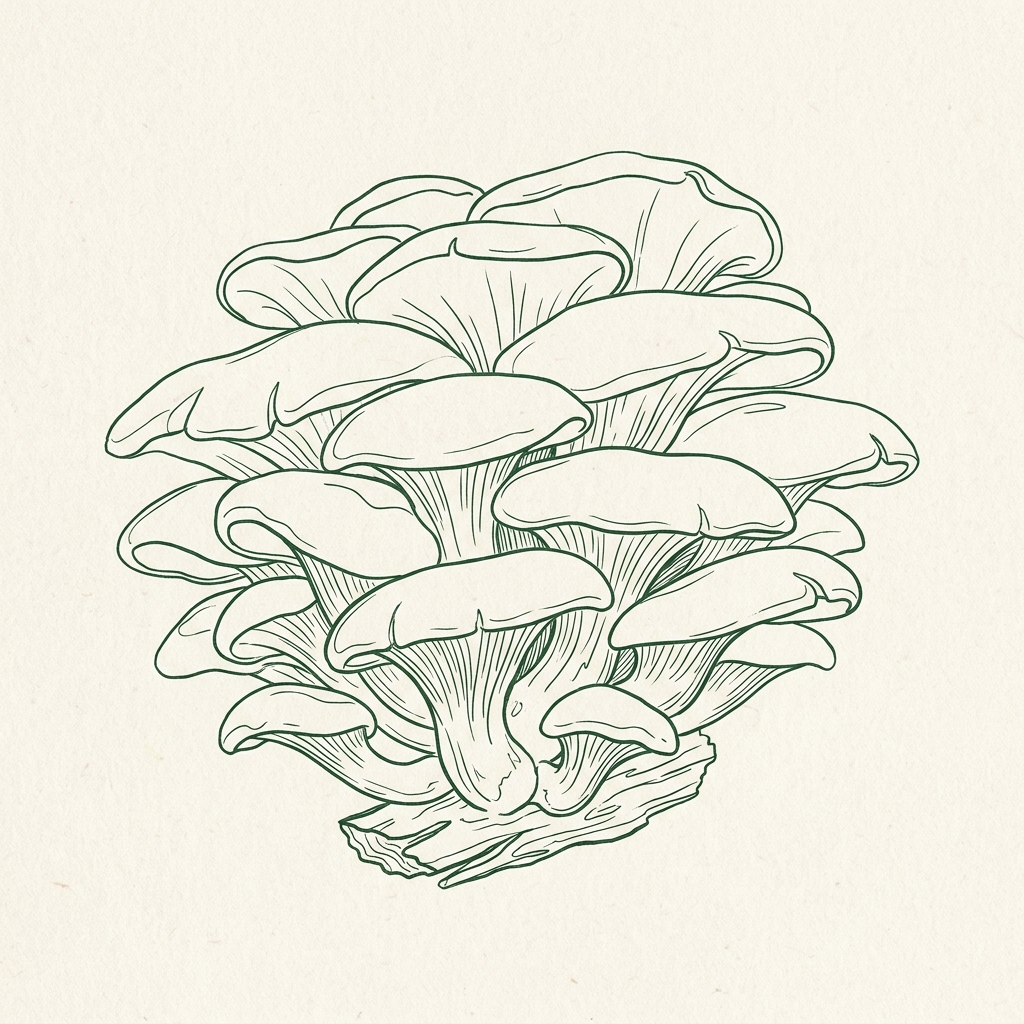
Blue Oyster
Pleurotus ostreatus
Fastest Mycelial Colonization & 100%+ Biological Efficiency
Shop Blue Oyster Kit →1. Taxonomic & Scientific Classification
| Kingdom | Fungi |
|---|---|
| Division | Basidiomycota |
| Class | Agaricomycetes |
| Order | Agaricales |
| Family | Pleurotaceae |
| Genus | Pleurotus |
| Species | P. ostreatus |
2. Optimal Cultivation Parameters
| Colonization Temp | 70°F – 75°F (21°C – 24°C) |
|---|---|
| Fruiting Temp | 55°F – 68°F (13°C – 20°C) |
| Humidity Colonization | 60% – 65% |
| Humidity Fruiting | 85% – 95% |
| FAE Requirements | Extremely High (6–10 room exchanges/hr; low FAE causes long stems) |
| Optimal Substrate | Pasteurized Straw, Hardwood Sawdust, or All-In-One Bags |
| Biological Efficiency | 90% – 125% fresh yield |
| Days to First Flush | 7 – 10 days after slash initiation |
3. Analytical Chemistry & HPLC Biochemical Assay
| Active Compound | Fungal Source | Physiological Mechanism |
|---|---|---|
| Pleurotus Beta-Glucans | Caps & Gills | Supports cholesterol reduction and activates cellular immune defenses. |
| Statins (Lovastatin) | Mycelium | Natural regulation of lipid synthase pathways. |
| Antioxidant Phenolics | Pigmented Cuticle | Blue pigments provide protective radical-scavenging activity. |
4. Scientific Questions & Empirical Protocols
Why do oyster mushrooms produce long stems with tiny caps?
This is a direct symptom of CO2 buildup and insufficient fresh air exchange (FAE). Oyster mushrooms require brisk air movement to trigger broad cap development.
What is the expected biological efficiency of Pleurotus ostreatus?
Oyster mushrooms are among the most efficient biological converters known, consistently achieving 100% to 125% Biological Efficiency on pasteurized straw and supplemented sawdust.
Legal & Analytical Disclaimer: SporlyWorks participates in partner programs and may earn commissions on qualified referrals at no cost to you. Dietary supplements and extracts are not intended to diagnose, treat, cure, or prevent any disease. Spore solutions and liquid cultures of active species are provided strictly for taxonomy and microscopy research.