
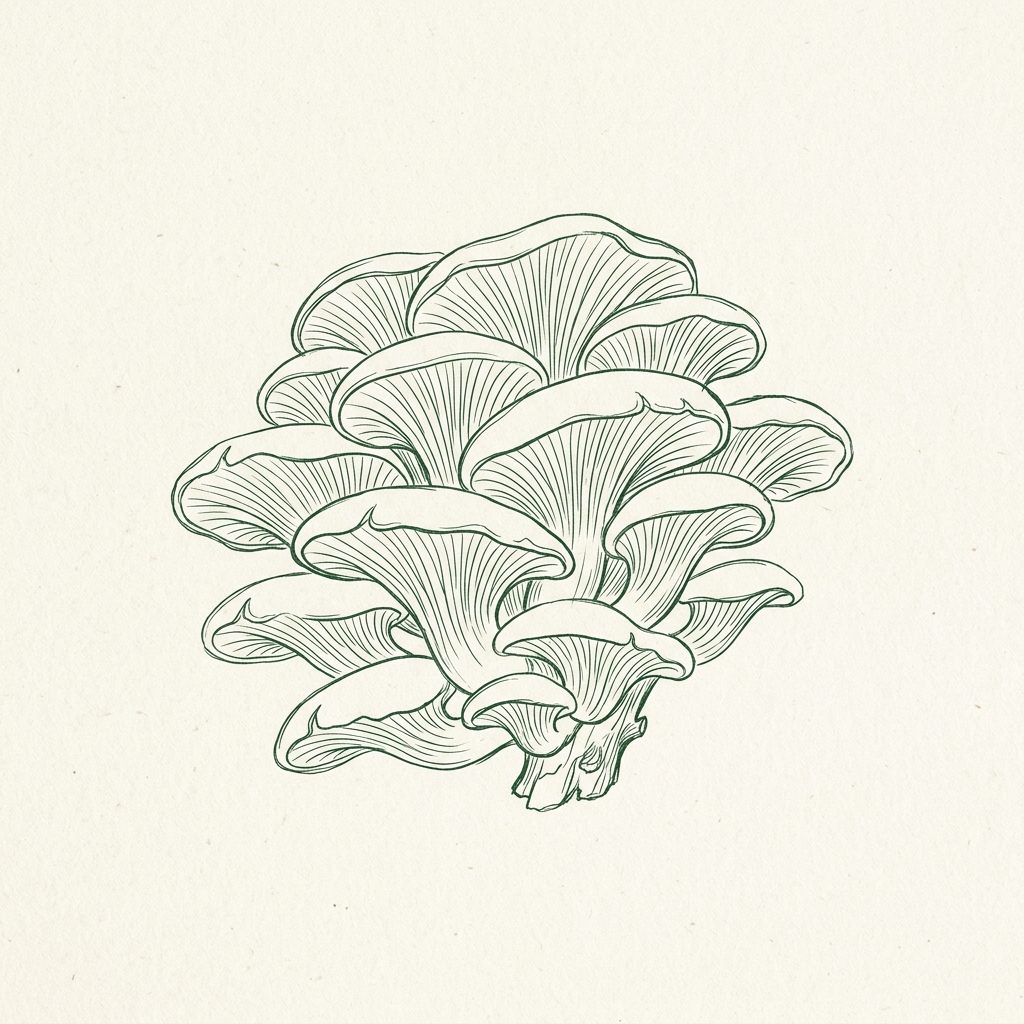
King Trumpet
Pleurotus eryngii
Culinary Excellence & High-Density Ergothioneine Antioxidant Source
Shop All-In-One Grow Bags →1. Taxonomic & Scientific Classification
| Kingdom | Fungi |
|---|---|
| Division | Basidiomycota |
| Class | Agaricomycetes |
| Order | Agaricales |
| Family | Pleurotaceae |
| Genus | Pleurotus |
| Species | P. eryngii |
2. Optimal Cultivation Parameters
| Colonization Temp | 72°F – 76°F (22°C – 24°C) |
|---|---|
| Fruiting Temp | 58°F – 64°F (14°C – 18°C) — requires cool fruiting drop |
| Humidity Colonization | 60% – 65% |
| Humidity Fruiting | 85% – 90% |
| FAE Requirements | Carefully tuned: high CO2 (1500–2000 ppm) develops thick meaty stems |
| Optimal Substrate | Hardwood sawdust supplemented with 20% wheat bran or soy hulls |
| Biological Efficiency | 70% – 90% fresh mushroom yield |
| Days to First Flush | 18 – 22 days following temperature drop |
3. Analytical Chemistry & HPLC Biochemical Assay
| Active Compound | Fungal Source | Physiological Mechanism |
|---|---|---|
| L-Ergothioneine | Full Fruiting Body | Master intracellular antioxidant with dedicated human cellular transporter (OCTN1). |
| Lovastatin (Mevinolin) | Mycelium & Cap | Naturally occurring HMG-CoA reductase inhibitor supporting lipid metabolism. |
| Pleurotus Polysaccharides | Cell Wall | Supports macrophage activation and gut microbiome diversity. |
4. Scientific Questions & Empirical Protocols
Why does King Trumpet require a temperature drop to fruit?
Pleurotus eryngii is a cool-season Mediterranean species whose pinning mechanism is biologically governed by an environmental temperature reduction from 75°F down to 58°F–62°F.
What makes King Trumpet mushrooms rich in ergothioneine?
King Trumpets are among the richest dietary sources of L-ergothioneine, an antioxidant that cells absorb through the specialized OCTN1 transporter to shield mitochondrial DNA from oxidative stress.
Legal & Analytical Disclaimer: SporlyWorks participates in partner programs and may earn commissions on qualified referrals at no cost to you. Dietary supplements and extracts are not intended to diagnose, treat, cure, or prevent any disease. Spore solutions and liquid cultures of active species are provided strictly for taxonomy and microscopy research.